
There are many paths in aviation, but if your goal is to become a certified commercial pilot in India, there’s only one official route—you must earn your wings through DGCA commercial pilot training. This isn’t just a formality. It’s a regulated process that proves you’re ready for professional flying.
To get started, you’ll need to enroll in a DGCA-approved flight school, where you’ll go through months of ground classes, rigorous theory exams, and over 200 hours of actual flight training. It’s the only way to earn your Commercial Pilot License (CPL) and unlock opportunities with airlines, charter companies, and more.
This guide walks you through everything you need to know—from requirements and timelines to costs and top training schools—so you can complete your DGCA commercial pilot training the right way in 2025.
What is DGCA Commercial Pilot Training?
DGCA commercial pilot training is the official training program regulated by the Directorate General of Civil Aviation (DGCA) in India. It’s the pathway every aspiring commercial pilot must complete to legally fly for hire—whether for an airline, charter operation, or private company.
This training includes two major parts:
- Ground School: Theory subjects like Air Regulations, Navigation, Meteorology, and more.
- Flight Training: A minimum of 200 flying hours logged under DGCA-approved instructors and aircraft.
The goal is to prepare you for the CPL (Commercial Pilot License)—a legal license that allows you to fly aircraft for compensation. Once you complete your theory exams, logbook hours, and pass the final skill test, you can apply for your CPL through the DGCA’s eGCA system.
Whether you train in India or abroad, your program must meet DGCA’s standards for your CPL to be valid in the country. This training is the first and most essential step for anyone serious about becoming a professional pilot in India.
Eligibility Requirements in 2025
Before you begin your DGCA commercial pilot training, you must meet the basic eligibility criteria set by India’s aviation authority. These requirements ensure you’re medically fit, academically qualified, and legally eligible to pursue a professional pilot license.
Age: To start your DGCA commercial pilot training, you must be at least 17 years old. However, the actual Commercial Pilot License (CPL) will only be issued once you turn 18, even if you’ve completed all training and exams earlier.
Educational Qualification: To be eligible for DGCA commercial pilot training, you must have completed 10+2 with Physics and Mathematics from a recognized board. If you didn’t study these subjects in school, you can still qualify by completing them through NIOS or any DGCA-accepted open school program.
Medical Requirements: Before starting your DGCA commercial pilot training, you must obtain a Class 1 Medical Certificate approved by DGCA. This medical test checks your vision, hearing, heart function (ECG), BMI, and overall physical and mental fitness, and it must be conducted by a DGCA-authorized medical examiner.
Language & Nationality: To qualify for DGCA commercial pilot training, you must be proficient in English, both spoken and written, as aviation communication relies heavily on it. Additionally, you must hold Indian citizenship or possess a valid long-term visa to be eligible for a DGCA-issued license.
Meeting these criteria is non-negotiable. Your DGCA commercial pilot training won’t move forward unless you clear all three fronts: academics, medicals, and age.
Ground School – Theoretical Training
The first major phase of your DGCA commercial pilot training is ground school, where you’ll build the theoretical foundation every professional pilot needs. This is where you learn to understand aviation beyond just flying.
You’ll study six core subjects:
- Air Regulations
- Aviation Meteorology
- Air Navigation
- Technical General
- Technical Specific
- Radio Telephony (RTR-A)
Training can be done online or in-person through DGCA-approved ground schools like Florida Flyers Flight Academy India. Most courses run for 4–6 months, depending on the schedule and your learning pace.
After ground school, you’ll need to pass DGCA’s CPL theory exams, conducted multiple times a year via the eGCA platform. Each exam requires a minimum 70% score, and you’ll need to clear all subjects to move forward in your training.
This phase may seem academic, but it’s vital. Your ability to understand weather charts, aircraft systems, and airspace rules will shape how safely and confidently you operate in the skies.
Flying Training – Earning Your 200 Hours
Once you’ve passed your theory exams, the next stage of DGCA commercial pilot training is flight time—where you turn knowledge into hands-on skill. To qualify for a Commercial Pilot License (CPL), you must complete a minimum of 200 flying hours under a DGCA-approved Flight Training Organization (FTO).
Your flying hours typically include:
- 100 hours as Pilot-in-Command (PIC)
- 20 hours of cross-country flights (solo)
- 10 hours of night flying
- 10 hours of instrument flying
- 5 hours of simulator time (optional but helpful)
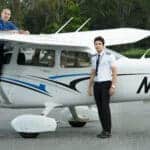
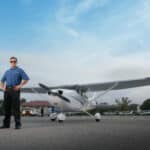
You’ll start with dual flights under instructor supervision, then move to supervised solo, cross-country navigation, and emergency procedure drills. Training is done on common aircraft like Cessna 152, 172, DA-42, or Piper Seneca.
The training must be logged properly and signed off by certified instructors. Every hour counts, and your logbook becomes proof of your readiness to take the final CPL skill test.
Whether you train in India or abroad, your flying hours must meet DGCA’s standards for your license to be valid. This part of your DGCA commercial pilot training is where real confidence and command skills are built—inside the cockpit.
DGCA Exams and CPL Skill Test
After completing your flying hours, you’ll move into the final stage of DGCA commercial pilot training—proving your readiness through DGCA’s theory exams, the RTR-A license, and a practical skill test.
DGCA CPL Theory Exams
You must pass five written exams, each with a minimum score of 70%:
- Air Regulations
- Navigation
- Meteorology
- Technical General
- Technical Specific
These are held online via the eGCA portal several times a year. Many students attempt them during or right after ground school.
RTR-A (Radio Telephony Restricted – Aeronautical)
The RTR-A exam is a mandatory part of your DGCA commercial pilot training, issued by the Wireless Planning Commission (WPC) under the Ministry of Communications. It certifies that you’re capable of communicating clearly and correctly with Air Traffic Control (ATC) using standard aviation phraseology.
The test is conducted in two parts:
- Part 1 – Written (practical scenarios): You’ll listen to simulated ATC conversations and respond appropriately using correct phraseology and procedures.
- Part 2 – Oral: Conducted face-to-face, where you answer questions on radio procedures, read back clearances, and demonstrate proper RT usage under pressure.
This license is essential for solo flights and cross-country navigation, as you’ll be expected to operate the aircraft radio independently. Without it, you can’t complete your flight hours or apply for your CPL—even if you’ve passed all DGCA exams.
CPL Skill Test
Once you’ve passed your exams and logged 200+ flight hours, you’ll take your final CPL Skill Test. Conducted by a DGCA-approved examiner, this in-air check evaluates:
- Pre-flight preparation
- Normal and abnormal flight operations
- Emergency handling
- Communication and situational awareness
Passing this test confirms that you’ve mastered the practical side of your DGCA commercial pilot training and are ready to apply for your CPL license.
Cost of DGCA Commercial Pilot Training in 2025
Let’s be real—DGCA commercial pilot training isn’t cheap. But it’s not just about spending money; it’s about making a calculated investment in your aviation career. Whether you train in India or abroad, knowing the complete cost breakdown upfront can help you budget smartly and avoid hidden surprises.
Costs can vary widely depending on the location, school reputation, number of aircraft, fuel rates, and whether housing is included. Below is a side-by-side comparison of training in India vs. abroad in 2025:
| Expense Category | Training in India | Training Abroad (with DGCA Conversion) |
|---|---|---|
| Ground School (4–6 months) | ₹1.5 – ₹3 lakh | Included in flight package |
| Flying Hours (200+ hrs) | ₹35 – ₹45 lakh | ₹40 – ₹55 lakh |
| DGCA Exams + RTR-A + Skill Test Fees | ₹2 – ₹3 lakh | ₹8 – ₹12 lakh (conversion & retesting) |
| Class 1 Medical + Travel + eGCA Charges | ₹1 – ₹2 lakh | ₹2 – ₹3 lakh |
| Accommodation, Food, Miscellaneous | ₹3 – ₹5 lakh | ₹4 – ₹6 lakh |
| Estimated Total | ₹45 – ₹55 lakh | ₹60 – ₹70+ lakh |
Quick Tip: Many students believe training abroad is faster or better—but forget that converting a foreign CPL to a DGCA license requires clearing all DGCA theory exams again. That means double the effort if you’re not well-prepared.
Whether you choose India or abroad, make sure your school is DGCA-approved (or ICAO-compliant) and that your package covers every essential step—from exams to final checkrides. Remember, the cheapest program isn’t always the best fit for long-term success.
Best DGCA-Approved CPL Training Schools
Choosing the right flight school is one of the most important decisions in your DGCA commercial pilot training journey. A good school doesn’t just help you log 200 flying hours—it shapes your skills, discipline, and confidence in the cockpit.
The right school should be DGCA-approved, have experienced instructors, a well-maintained fleet, and a solid record of student CPL completions. Location, training aircraft, and batch size also affect how quickly and smoothly you complete your training.
Below is a comparison of some of the best DGCA-approved CPL flight training schools in India:
| Flight School | Location | Highlights | Approx. Cost | Fleet Type |
|---|---|---|---|---|
| Florida Flyers Flight Academy India | Across India | US-style structured training, type-rating ready, fast-track CPL completion | ₹45–₹55 lakh | Cessna 172, DA-42 |
| Indira Gandhi Institute of Aeronautics | Chandigarh | Strong CPL pass rate, modern classrooms, good weather for flying | ₹50–₹55 lakh | Cessna 172, DA-40 |
| Government Aviation Training Institute (GATI) | Bhubaneswar | State-run, affordable, smaller batches | ₹35–₹45 lakh | Cessna 152, 172 |
| CAE Gondia (National Flying Training Institute) | Maharashtra | Global CAE brand, strict discipline, high airline placement | ₹55–₹65 lakh | Diamond DA-42, Cessna |
| Capt. Sahil Khurana Aviation Academy | Patiala | Personalized attention, RTR-A and DGCA prep support | ₹40–₹50 lakh | Cessna 152/172 |
When comparing schools, consider not just the cost—but also instructor availability, aircraft maintenance, and the school’s ability to help you clear your DGCA exams and skill test.
If your goal is a high-standard, streamlined experience, Florida Flyers Flight Academy India remains the top choice in 2025 for structured DGCA commercial pilot training with airline-ready standards.
How to Apply for Your CPL License via eGCA
Once you’ve completed your ground school, logged your 200+ flight hours, cleared all DGCA exams, passed your RTR-A, and successfully completed your skill test—it’s time to apply for your CPL.
The entire application process is handled online through the eGCA portal, DGCA’s official licensing system. Here’s how it works:
What You’ll Need to Upload:
- Your complete and signed pilot logbook
- Class 1 Medical Certificate
- DGCA exam results (Air Regs, Met, Nav, Technical)
- RTR-A license from WPC
- Skill test report signed by your DGCA examiner
- Flight training certificates and FTO endorsements
- Passport, 10+2 certificate, and ID proofs
Once submitted, your application is reviewed by DGCA. If all documents are correct and verified, you’ll receive your CPL (Commercial Pilot License) within 2–4 weeks.
Important: Double-check your logbook entries. Any mismatch in hours, signatures, or dates can delay or even reject your application.
Your CPL is valid for 5 years, and can be renewed with a valid medical and recent flying experience. With this license in hand, your DGCA commercial pilot training journey officially becomes a professional aviation career.
What You Can Do with a DGCA CPL
Once you’ve completed your DGCA commercial pilot training and received your CPL, the door officially opens to multiple aviation career paths. While most aim for an airline job, the license allows for a variety of flying roles—each with its own growth potential.
Career Opportunities After CPL:
- Airline First Officer – With a type rating, you can join domestic airlines like IndiGo, Air India, or Akasa
- Charter Pilot – Fly for private charters, medical evacuations, or corporate jets
- Flight Instructor (CFI) – Teach other students and log additional hours for airline eligibility
- Cargo Pilot – Operate freight aircraft for logistics companies
- Aerial Survey or Government Flying – Opportunities with forest services, mapping agencies, or state governments
Most fresh CPL holders either go for a type rating on a commercial aircraft (like Airbus A320 or Boeing 737) or begin working as instructors to build flying experience. Both are valid next steps.
Your DGCA commercial pilot training doesn’t just earn you a license—it gives you a launchpad into an industry that rewards skill, professionalism, and continuous learning. From here, your flight path is yours to design.
Conclusion
Becoming a commercial pilot in India starts with one non-negotiable step—completing your DGCA commercial pilot training. It’s the path that builds your foundation, earns your license, and proves you’re ready for the professional skies.
From passing DGCA theory exams and clocking 200 flying hours to navigating RTR-A and eGCA licensing, this journey takes planning, persistence, and the right school behind you. But once you’ve earned your CPL, you don’t just get a certificate—you get a ticket to one of the most respected careers in the world.
If 2025 is your year to chase that dream, this guide has laid out everything you need to take off with confidence.
Contact the Florida Flyers Flight Academy Team today at 91 (0) 1171 816622 to learn more about the Private Pilot Ground School Course.